Chiang Mai has carried the digital nomad label for over a decade. After a year of living here, I started asking myself where it actually comes from. It shows up in casual conversations with other nomads, it gets validated by every "best cities for remote work" list, and earlier this year Forbes included Chiang Mai in its list of 8 Cities Digital Nomads And Creators Are Moving To In 2026. Eventually, when you hear something repeated so many times, it stops feeling like a description and starts feeling like a given. I wanted to trace it back to something more concrete.
In the informal conversations I have had with nomads here, a few points always resurface: Chiang Mai is charming, has a great community, well-developed infrastructure of co-working spaces, cafés and internet access. It is affordable, and the locals are incredibly friendly. The Forbes piece adds a layer: in addition to these foundational requirements, location-independent professionals increasingly seek strong business ecosystems, networking opportunities, and income-generation potential. Digital nomads are moving from a "remote worker"-led identity toward "digital entrepreneur," aligned with the broader growth of the digital economy.
That framing places Chiang Mai in the mature group of nomad destinations. But how did it get there? There are not many English-language research cases on Chiang Mai, but the most extensive work, by Jiwasiddi et al. (2024), Cook (2020 & 2022), and Green (2020), establishes a picture of the structural and historical conditions that made this possible. What follows is my attempt to piece that together.
How Chiang Mai's tourist infrastructure laid the groundwork for digital nomads
Before laptops took over the Nimman cafés, Chiang Mai was northern Thailand's primary backpacker hub and a well-established tourist destination. According to Jiwasiddi et al. (2024), its reputation as a backpacking destination goes back to the 1973 Lonely Planet guide. Lonely Planet, founded that year, was among the first guidebooks aimed at independent budget travelers, and its Southeast Asia editions helped map out the region for a generation of backpackers. Chiang Mai became the northern anchor of that circuit - the stop after Bangkok and the gateway to hill-tribe trekking.
Then, in 2012, the Chinese blockbuster "Lost in Thailand," filmed in Chiang Mai, triggered a massive surge in Chinese tourist arrivals. According to local tourism authorities, Chinese tourist numbers to Thailand rose 50% that year compared to the one before. This matters because more tourists meant more cafés, more English-speaking service staff, more guesthouses normalized to foreign habits, the exact infrastructure that the nomad community would later build on. Nomad infrastructure, in other words, is largely tourist infrastructure with a laptop on the table.
So by the mid-2010s, and even before, Chiang Mai already had affordable guesthouses, cafés, a considerable number of English-speaking service workers, and an established reputation as a desirable destination for foreigners. This was the foundation.
How Chiang Mai became the world's #1 city for digital nomads (2013–2019)
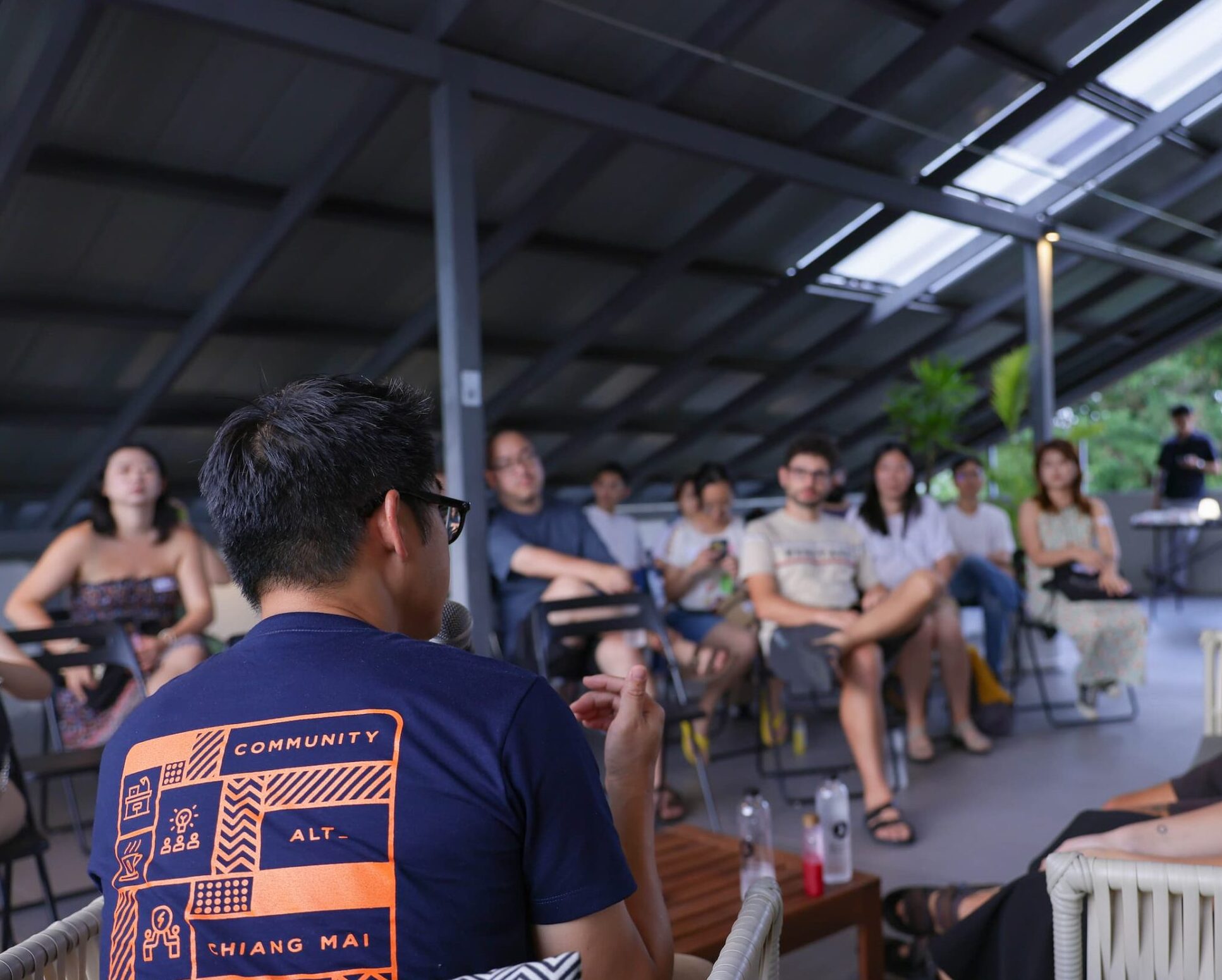
One cannot have a nomad capital without a nomad ecosystem, and the heart of that ecosystem, then and now, is coworking spaces. Chiang Mai's first, Punspace, opened in 2013 in Nimman, with a second location in the Old Town a year later. Punspace gave a scattered group of remote workers (until then spread across the city's cafés) a single room to gather in, and in doing so it turned a loose collection of individuals into something that felt like a community. It quickly became the template for the dozens of co-working spaces that followed, and set the model for how the city's nomad scene would take shape. That model is still evolving — spaces like Alt_ Coliving, which serves as the venue for CosmoLocal CNX this September, represent the next iteration: not just a desk and wifi, but a community infrastructure built for longer stays and deeper collaboration.
In 2014, Nomad List was launched and became the primary platform where would-be nomads looked up city ratings. Almost immediately, Chiang Mai was ranked the world's best city for remote workers, a ranking it held for most of the next five years. The founder, Pieter Levels, had chosen Chiang Mai as his home base, which raises an uncomfortable question about how "objective" those early rankings were. It is possible that one person's choice of home city shaped where an entire generation of nomads pointed themselves.
A year after that, in 2015, the first Chiang Mai Nomad Summit was held. It became an annual event that gathered the lifestyle enthusiasts, entrepreneurs and anyone interested in location-independent lifestyle.
The research confirms the momentum that followed. In a 2016 Forbes feature titled "Why Digital Nomads & Entrepreneurs Keep Choosing Chiang Mai," author Casey Hynes documents multiple nomad stories, and the through-line across all of them is the same: community, infrastructure, affordability. Between the triggering events, the platform, the co-working spaces, the community gatherings, the media coverage, the community kept growing, events were held, more infrastructure came online. Eventually the network effects locked in. Nomads chose Chiang Mai because others had chosen Chiang Mai.
Is Chiang Mai still a top digital nomad destination in 2026?
The last ten years have seen significant changes in the city, and you can feel it in the conversations. Newer hubs now compete on the very things Chiang Mai was once known for, Da Nang in Vietnam offers lower costs and cleaner air, Tbilisi in Georgia offers one of the easiest visa situations in the world. When Forbes published its 2026 list, Chiang Mai was on it, but as one of eight cities rather than the single name at the top. Though one could also argue that today there are far more location-independent professionals than ten years ago, so it is reasonable that more nomad capitals keep emerging.
The community itself has changed too. Many of the remote workers who once passed through have either moved on or settled into longer stays, helped by Thailand's five-year Destination Thailand Visa introduced in 2024. The city that built its name on people constantly coming and going is, increasingly, a place where people choose to return to or stay for a longer time, and September, once its quietest month, is becoming one of its most interesting.
What actually made Chiang Mai a digital nomad hub, and why network effects sealed it
The honest answer is that the structural conditions, a favorable cost-to-quality ratio, fast internet, accessible public infrastructure, a time zone that bridges Europe and Asia, some English-speaking local population, pleasant weather for most of the year, quality healthcare, safe streets, were necessary but not sufficient. Plenty of cities have comparable fundamentals and never became anything.
What made the difference is that ecosystem builders recognized those conditions as an opportunity and built on top of what was already there. The nomad infrastructure was layered onto the tourist one. The cafés and guesthouses came first and drew people in; the co-working spaces followed to serve the community that formed around them. Nomads like to distance themselves from the tourist label, but the foundation was already there before any of us arrived.
Then the network effects took over and made the whole thing self-reinforcing. After a certain point, people chose Chiang Mai because other people had chosen Chiang Mai, and no list of structural advantages explains that part.
This also means that the shift Forbes identified in 2026 - from "remote worker" to "digital entrepreneur" - is not a new trend for Chiang Mai. A city that attracted geoarbitrage-minded, infrastructure-savvy, community-driven people from the beginning was always going to skew toward builders and founders. The early scene was dropshippers, affiliate marketers, and SEO operators, not salaried staff working remotely; the core was built by digital entrepreneurs from the start. Forbes took a decade to notice.
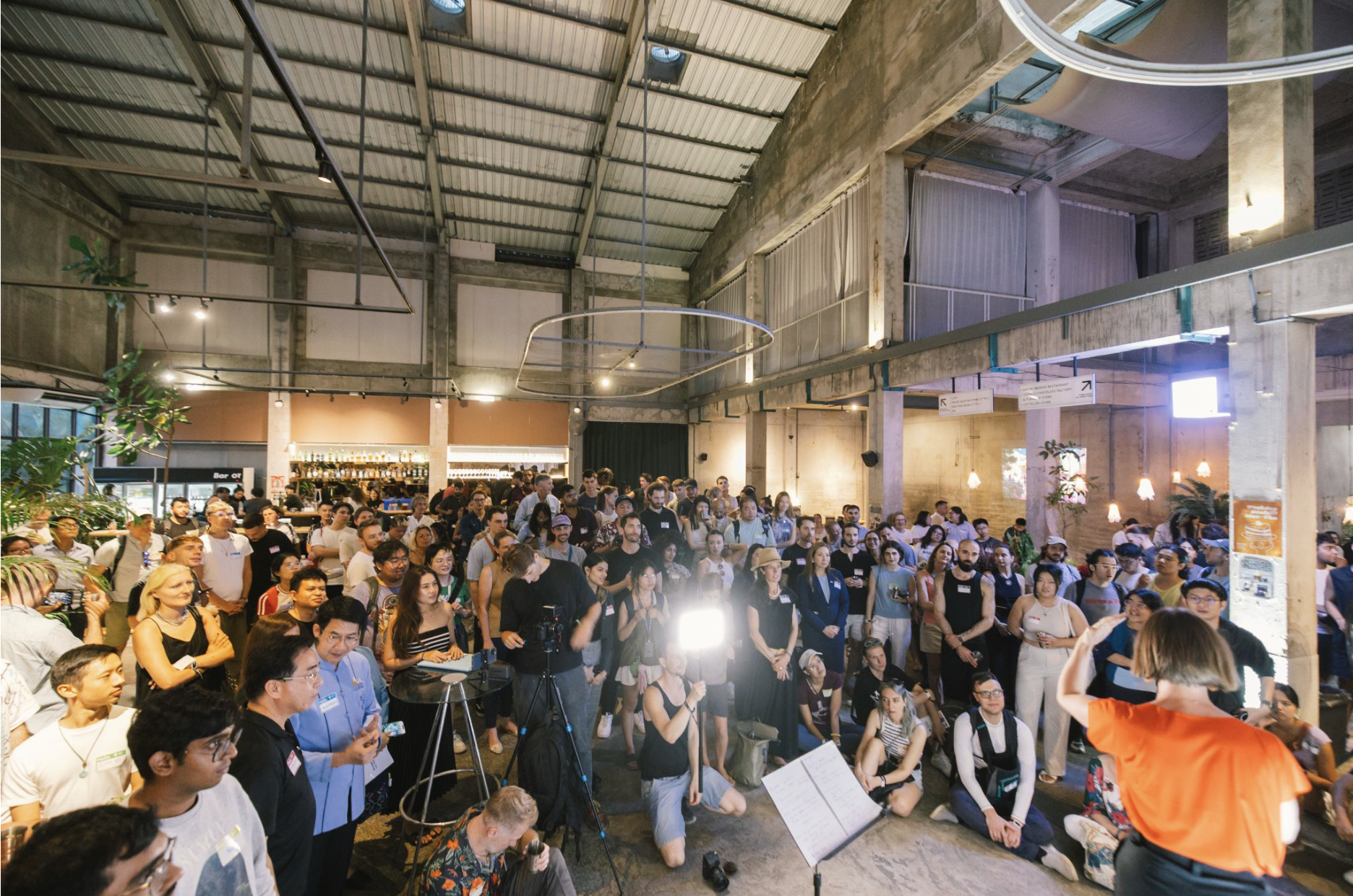
That entrepreneurial streak is written into the city's event calendar. Over the years Chiang Mai has become a regular stop on the circuit of nomad and online-business gatherings: the Nomad Summit, which began here in 2015 as one of the first conferences of its kind; the Chiang Mai SEO Conference, a large annual meeting of marketers and affiliates each November; and the Cross Border Summit, which draws e-commerce and Amazon sellers from around the world. These events give people a reason - and a date - to return, turning one-off visitors into repeat ones and, over time, into part of the community.
CosmoLocal CNX adds a newer and slightly different layer: where most of these gatherings have centred on growing online businesses, it is built around co-creation, skill-sharing, and local impact, and around a format designed for depth, not just attendance.