How the right gathering turns an off-peak month into a destination's most valuable asset
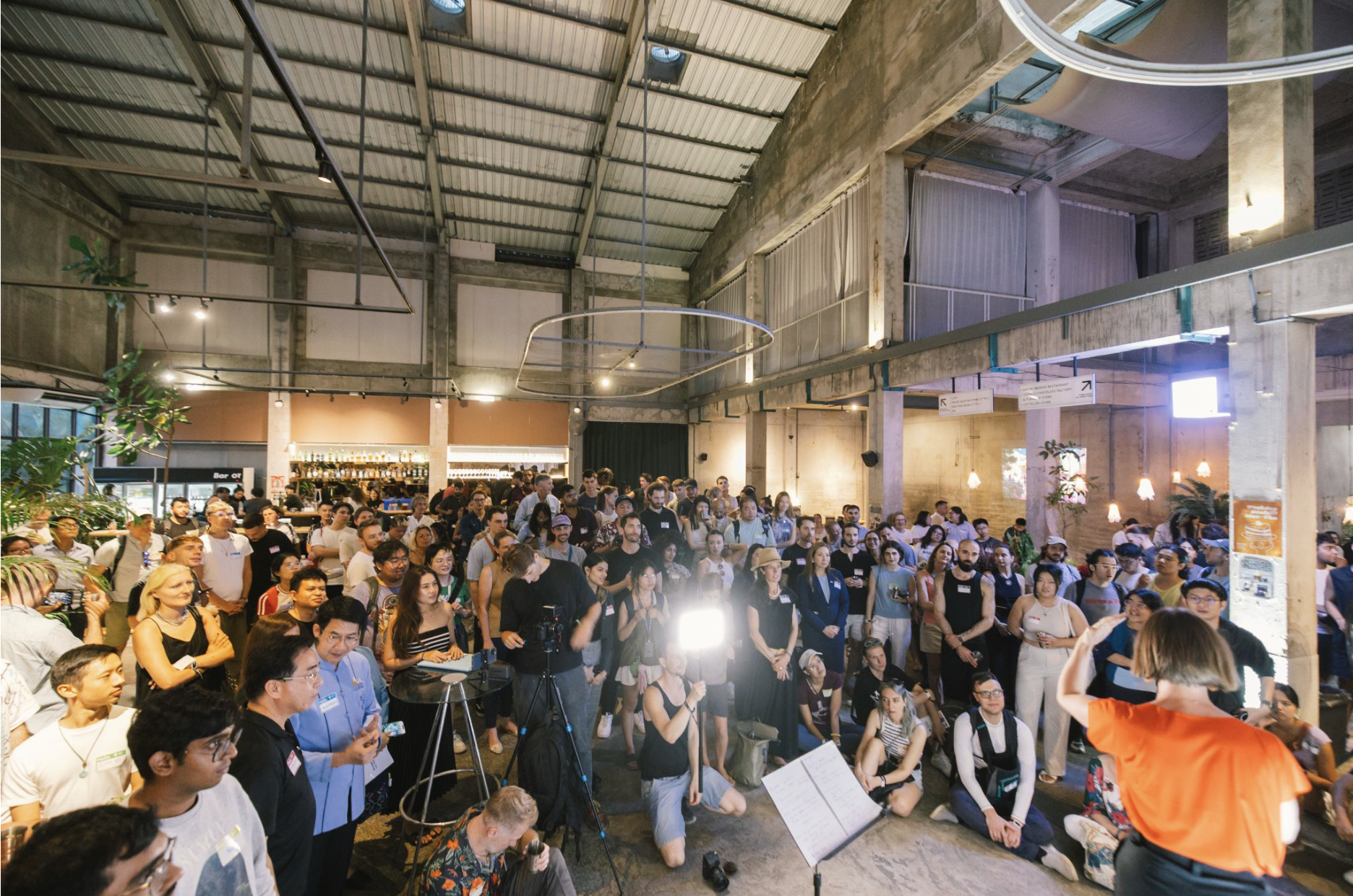
In October 2024, I watched 2000+ people arrive in Chiang Mai for a month.
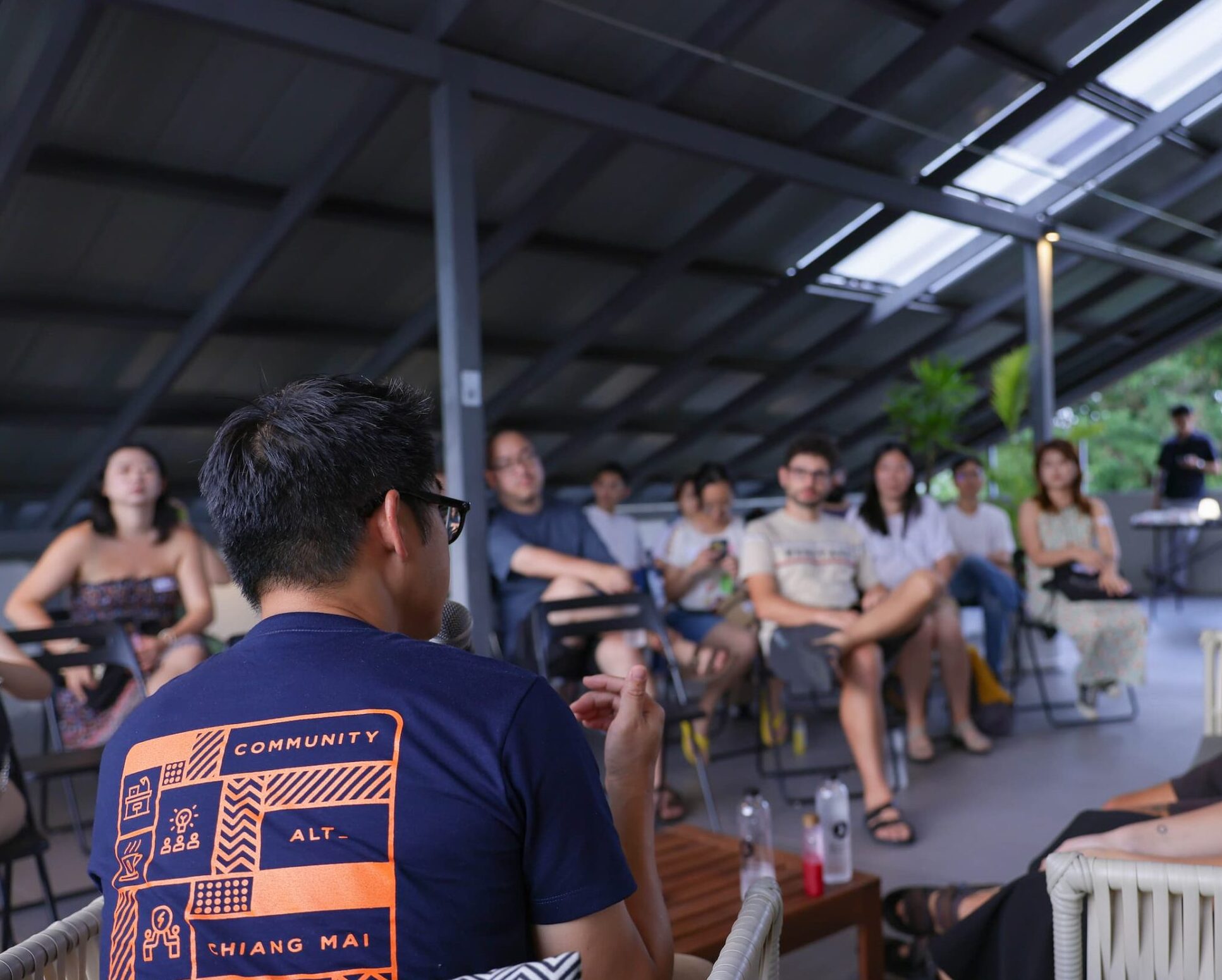
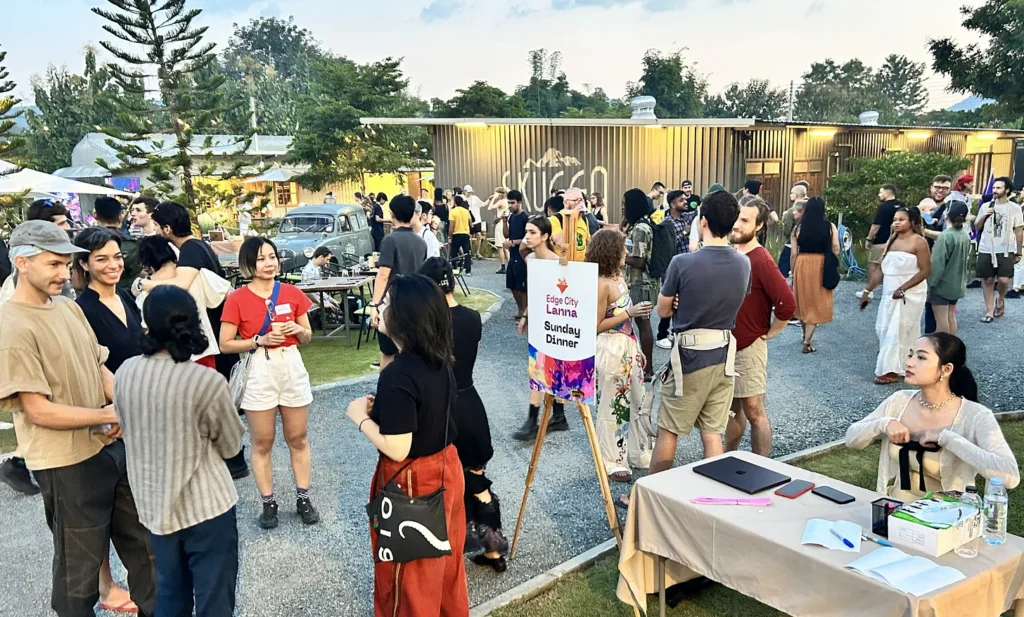
They were builders, founders, and researchers from the global tech and Web3 world, a popup city experiment that briefly turned Wat Ket into one of the most active digital nomad hubs in Southeast Asia. and I hosted 700 of them in Alt_PingRiver and the greater Wat Ket district. For four weeks, a neighborhood that doesn’t feature on the usual nomad circuit had a different kind of energy.
Restaurants that normally rely on local foot traffic saw new foreigner faces every day. Small businesses along the riverfront had a steady stream of visitors who wouldn’t otherwise have found them. The economic ripple was visible and real, even in a district that nobody had marketed as a nomad destination.
And then the month ended, and everyone left.
What stayed with me wasn’t the popup city itself, but the gap it exposed. Two thousand people had spent more than a month in one of the world’s most livable cities, and almost none of them had built any meaningful connection to it. They connected with each other. They worked hard. They explored. But the city was a backdrop rather than a participant.
The local entrepreneurs, the Thai founders, the creative community that gives Chiang Mai its actual character: they were largely absent from the rooms where the interesting conversations happened. That wasn’t a failure of execution. It simply wasn’t the intention of the organizers.
I kept thinking about that distinction. What would it look like if the intention was different?
That question is what eventually became Cosmo Local CNX. But to understand why it matters, it helps to understand the larger problem it sits inside.
Chiang Mai has a nomad season. But it doesn't have to.
Ask anyone familiar with the city and they’ll tell you the same thing: October through February is when Chiang Mai comes alive. The weather cools down, the nomads arrive, the SEO Conference, the Cross Border Summit, and the Chiang Mai Nomad Summit all land in this window, collectively pulling thousands of remote workers into the city at the same time. The coworking spaces packed. Workshops, meetups, parties of all sorts are being hosted almost daily.
It’s a genuine concentration of talent and economic activity. It also has an invisible ceiling that nobody seems particularly interested in raising.
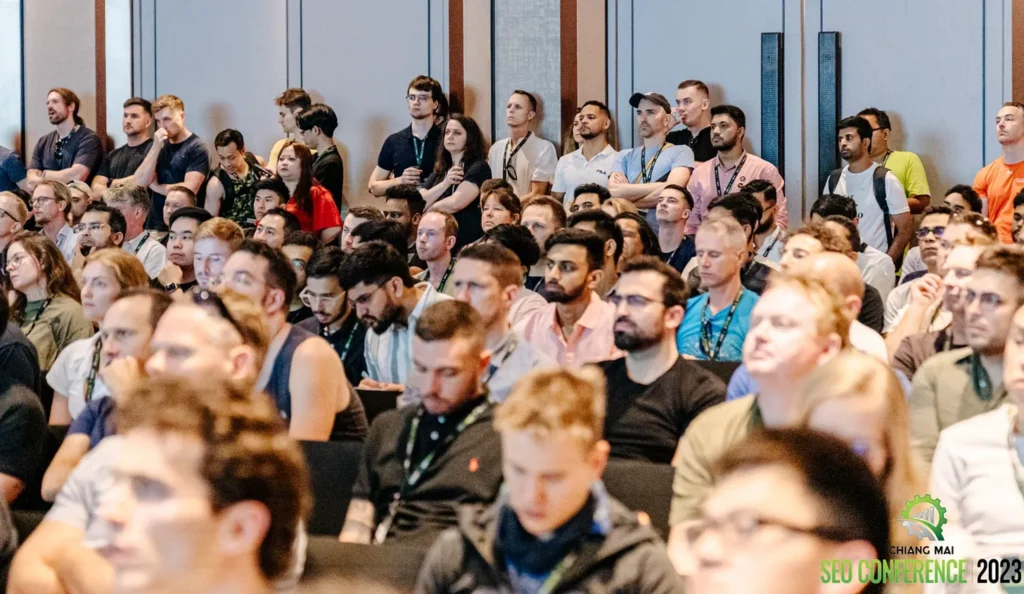
By March the city starts to thin. May is hot and quiet. September sits almost entirely empty. Tourism in Chiang Mai, like most of Thailand, follows predictable seasonal patterns, and the nomad economy runs on a similar rhythm. Venues and spaces that operate at capacity between November and January spend much of the year waiting for the cycle to start again.
The conventional story is that this is simply how it is. Chiang Mai has its season, and the other months are the trade-off for being in Southeast Asia.
I’ve lived and built here long enough to find that story less convincing every year.
What Bansko Nomad Fest taught me
Bansko, Bulgaria is a ski town. Its economic identity is built entirely around winter. When the snow melts, the hotels empty and the town waits for the cold to return.
Then Bansko Nomad Festival (BNF) happened.
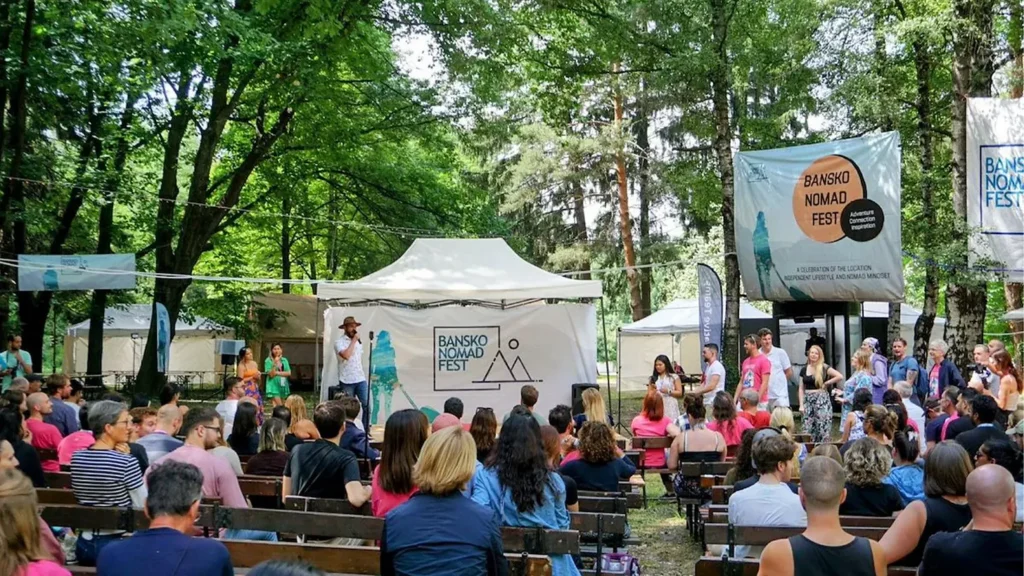
BNF was created with a straightforward intention: give nomads a specific reason to be in Bansko in June. It was also a non-Schengen state where some nomads can hop out of Europe easily and reset their visa. I’ve attended BNF twice as a speaker, and what struck me each time wasn’t only how many nomads gathered in this ski town, but what happened after the official week ended.
People didn’t leave.
Nomads who came for the eight-day festival stayed through the summer. Some returned the following year and bought apartments. Bansko had an oversupply of affordable property, and the festival had built a community worth anchoring to. More than a few digital nomad friends I know have since obtained Bulgarian residency.
What began as a ticket to a gathering became a recurring chapter in how they structure their year.
The numbers reflect it. The festival grew into the largest nomad festival in the world, drawing nomads from more than 40 countries. By 2025 it had almost 800 participants, with the 2026 event targeting 1,000. But those headlines miss the more important point. Bansko invented a summer. A season that didn’t exist before the festival was created. So much so shops that are normally closed now opens to capture new business cycle.
Infrastructure didn’t do that. A gathering did.
The mechanism, once you see it, is straightforward. Remote work solves geography. What it doesn’t solve is belonging. Working alone across time zones, building a life that most people around you don’t fully recognize, maintaining friendships that exist mostly on screens: these are the quiet costs of location independence that don’t appear in any lifestyle content. The freedom is real, but so is the isolation.
Nomad festivals are, at their core, reunions for people without a fixed hometown.
The draw is more than the speaker lineup. It’s the ability to walk into a room full of people who have made the same unconventional bets and not have to explain yourself. That’s why people return to Bansko year after year. The community found a home base there, and people return to places they belong to.
For Chiang Mai, this is proof that the off-season problem is a design challenge, not a fixed condition.
The potential is higher than most people think
There’s a fact about Chiang Mai that almost never comes up in conversation: the city is an official sister city of Austin, Texas. The designation matters less as a diplomatic detail and more as a provocation. What do these two cities actually share? Both built reputations around creativity, culture, and a pull on people who want to work and live differently. Both have ecosystems that run deeper than any single industry or community.

What Austin has that Chiang Mai doesn’t yet is South by Southwest (SXSW).
SXSW started in 1987 as a small music festival. It grew by continuously adding reasons to show up: film, then technology, then interactive media, then culture broadly. In 2023 it drew roughly 345,000 attendees over nine days.
The 2024 edition generated $377 million for local businesses and residents, with out-of-town participants spending an average of $650 per day. It is now the single most economically impactful event in Austin’s calendar, ahead of every other festival and sporting event in the city.
Those numbers are extraordinary, but they aren’t the lesson. The lesson is what SXSW did to Austin’s identity over time. It stopped being a conference that happened to be held in Austin. It became something that made Austin the city it is. The gathering became a kind of infrastructure: not coworking spaces and fast internet, but gravity and belonging and a reason to keep coming back.
Chiang Mai has more raw material for this than most people give it credit for. Design Week, TEDx, a culinary heritage built over centuries, Northern Thai craft traditions, a creative and academic community that has been quietly growing for years.
The nomad conferences are one layer of something that could be considerably larger. The opportunity is a gathering that connects all of those layers and draws in not just remote workers but expats, local entrepreneurs, startup communities, and international visitors who each have their own reason to be here.
That’s what turns an event into something a city builds its identity around. Chiang Mai is not Austin. But the logic holds.
The case for September: Chiang Mai's best-kept month
Here is what September in Chiang Mai actually looks like, from someone who has spent enough time here to know.
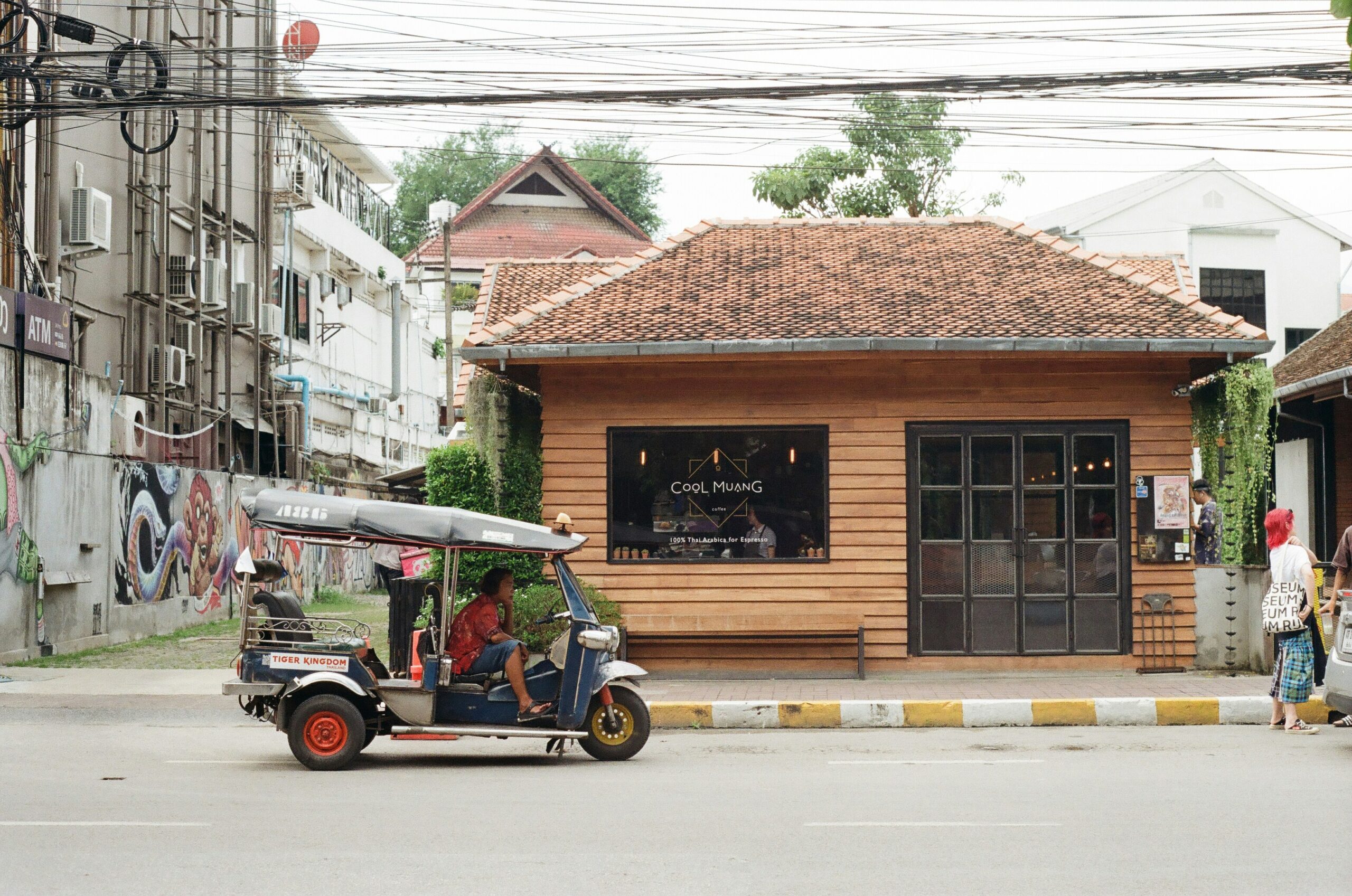
The rain comes in the afternoon, usually for an hour or two. Sometimes less. The rest of the day is cooler than the hot season, cleaner than the months before the rains arrive, and noticeably quieter than any point between November and February. The mountains surrounding the city are green in a way that photos don’t quite capture. The streets are easy to navigate. The restaurants you actually want to eat at have tables. The co-working spaces have desks. Accommodation options are abundant and even more affordable.
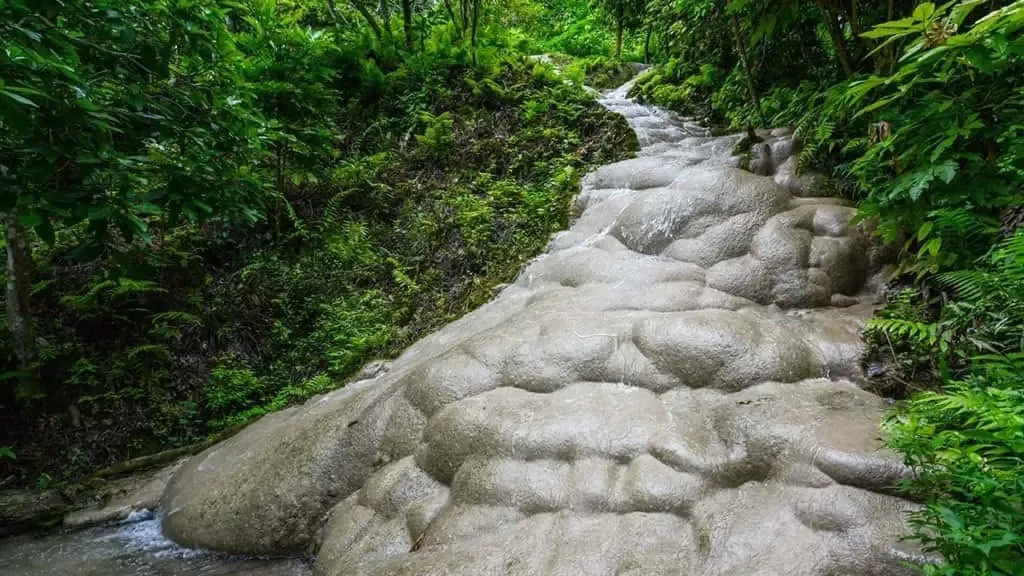
It is, honestly, one of the most pleasant times to be in this city. Almost nobody who hasn’t experienced it believes that, because almost nobody with a platform is making the case for it.
That’s a destination storytelling problem, not a climate problem.
The cities gaining ground in the nomad economy aren’t waiting for travelers to stumble across their best-kept months by accident. They build something that gives people a specific reason to show up, then make the case for it loudly and repeatedly until the perception shifts.
That’s what Bansko did with June. It’s what Madeira did with its Digital Nomad Village. It’s what Athens is doing now with its Nomad Fest, what Palermo is doing with Italia Nomad Fest.
Each of these is a deliberate act of destination programming. Someone decided the off-peak problem was worth solving and built something around it.
Why are we building Cosmo Local CNX?
Coming back to October 2024: what the popup city showed me is that Chiang Mai can fill a lessor known district in Chiang Mai. The demand is there. Global talent will come when given a good enough reason. A popup of that scale arriving in Wat Ket had a visible impact on a district that doesn’t normally see that kind of foot traffic.
What it also showed me is that filling the month isn’t the hard part. The harder and more interesting question is what the people arriving actually leave behind. Whether the city is richer for having hosted them, not just economically but in terms of relationships, ideas, and connections that persist after everyone goes home.
The Web3 popup city wasn’t designed with that in mind. That wasn’t its purpose. But the gap it revealed stayed with me.
Cosmo Local CNX is the attempt to build something with that intention from the start.
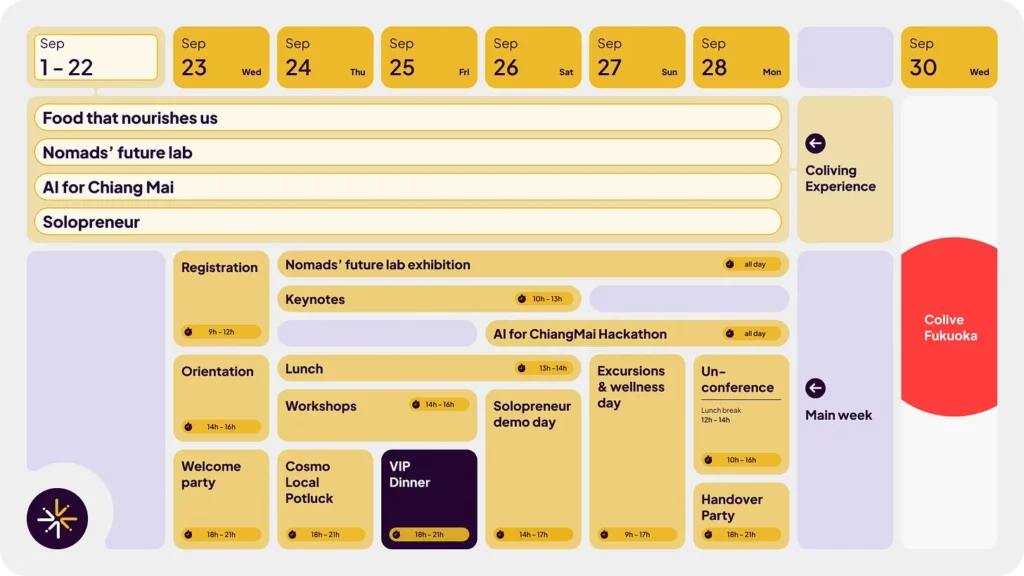
It’s a month-long popup village in Chiang Mai’s Wat Ket district, running through the whole of September 2026. Four parallel coliving experiences run simultaneously:
- AI for Chiang Mai
- Food That Nourishes Us
- Solopreneur
- Nomad Futures Lab.
Each brings together global participants and local practitioners around a shared theme. They converge on a Main Week from September 23 to 28, six days of shared events, showcases, and public programming open to the city.
The design is different from most nomad festivals.
Most festivals are built to give nomads a great week somewhere new. That’s genuinely valuable, and I don’t underestimate it. Cosmo Local CNX is built for people who want something more specific: to start something in Chiang Mai, to connect with the local startup and entrepreneurial ecosystem in a way that outlasts the month, to explore what longer-term roots here might look like.
The AI for Chiang Mai cohort spends its first week listening to local businesses before proposing anything, working through NDEA and the Chiang Mai Chamber of Commerce.
The Soloprenuer track gathers international and local entrepreneurs to provide a structured, actionable roadmap whom can actually execute after the month ends by themselves.
The Nomad Futures Lab treats the event itself as a research subject, documenting what actually happens when global and local communities are given a month and a shared purpose.
Colive Fukuoka joins as a strategic partner, connecting two startup ecosystems across Asia. The goal isn’t visibility for either side. It’s to move talent meaningfully between Fukuoka and Chiang Mai, building the kind of ongoing relationship between two cities that a conference weekend can’t produce.
The goal for September is to demonstrate that Chiang Mai’s quiet season is an opportunity that’s been sitting unused, and to start building something that gives the city a specific gravitational pull during a window the rest of the nomad world hasn’t found yet.
Bansko built a summer. Chiang Mai can build a September.
If that idea interests you, consider buying a ticket to join at cosmolocalcnx.com.